UK employers plan pay rises clustered around 3% for 2026, IDR finds
Most UK employers plan pay rises near 3% for 2026, survey shows; the pace matters for inflation and Bank of England policy.

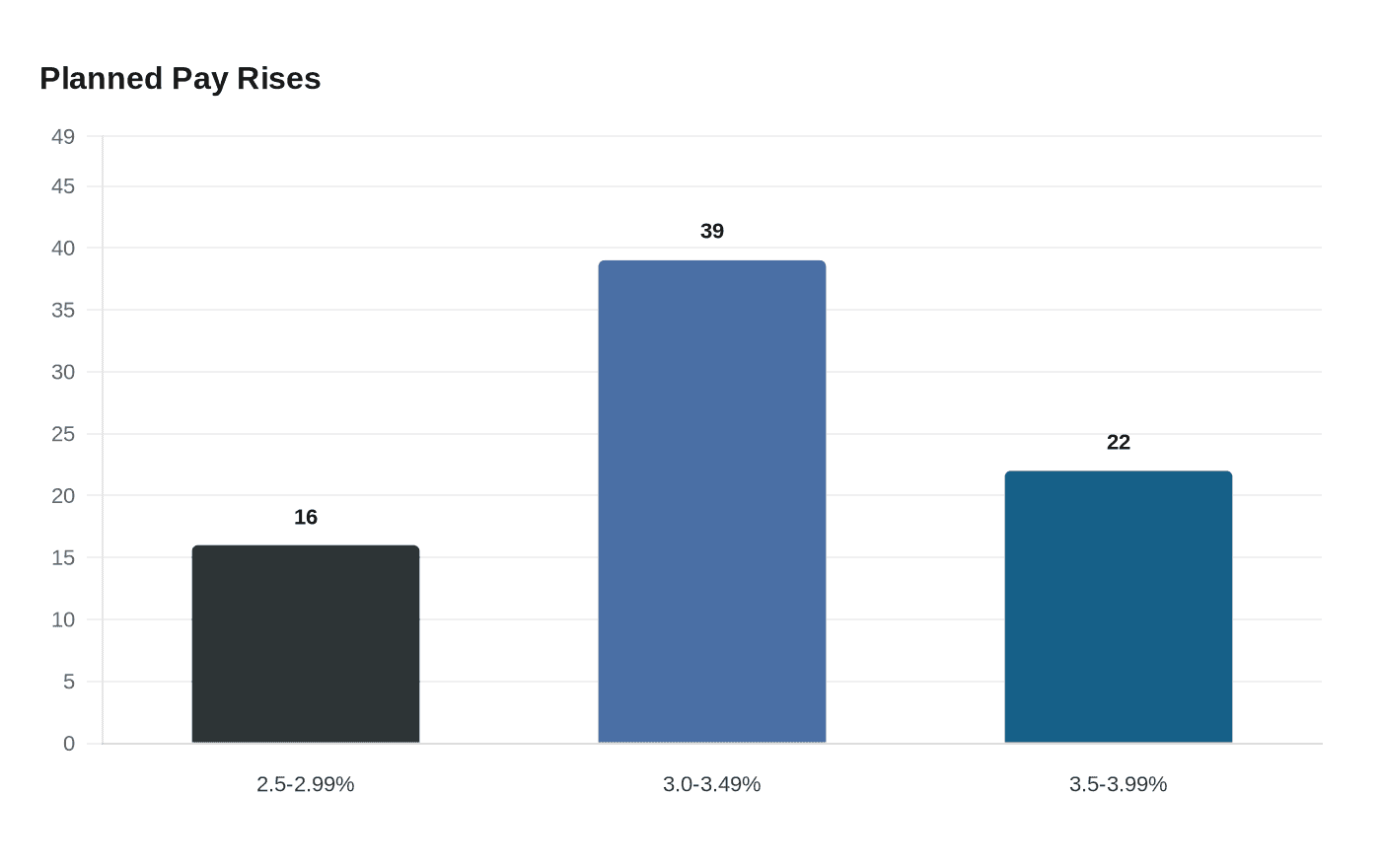
A survey by Incomes Data Research published Feb. 2 found 39% of British employers are most likely to plan pay rises of 3.0%–3.49% for 2026, based on responses from 121 firms covering a combined payroll of about 2.8 million workers. The poll, drawn from responses in November and December, also showed 22% of employers aiming for 3.5%–3.99% and 16% targeting 2.5%–2.99%.
IDR’s breakdown suggests a clear modal cluster around the 3% mark. The same survey asked employers how 2026 awards would compare with 2025: 44% said they planned to offer the same pay rises, 28% expected to offer more and 28% expected to offer less. The finding points to broadly steady settlements at a time when both firms and policymakers are watching wage momentum closely.
“Inflation is currently higher than it was a year ago and this has applied upward pressure on pay to some extent,” said Zoe Woolacott, an IDR researcher, underlining the role of recent price developments in shaping employer decisions.

Industry and vendor studies show the same central tendency. Brightmine reported that the median basic pay award in the three months to the end of November was 3.0%, down from 3.3% in the prior three-month window, and described 3% as the most common expectation for next year. Brightmine’s dataset, as reported, covered 18 pay awards affecting about 118,000 employees between Sep 1 and Nov 31. “Unless economic conditions improve meaningfully, most organisations are preparing for another year of tight pay budgets,” said Sheila Attwood, Brightmine senior content manager. “Early indications suggest that 2026 pay awards could potentially edge lower than 2025’s 3 per cent threshold as cost pressures continue to weigh on employers.”
An HR-focused vendor, HrDataHub, told employers that pay growth was holding steady at around 3%, and that 42% of respondents were planning flat-rate pay awards in 2026, while noting National Living Wage increases are raising pay-compression pressures.
The pay plans come against a backdrop of cooling headline wage growth and moderating inflation. Official data show private-sector regular pay growth, excluding bonuses, slowed to an annual rate of 3.6% in the three months to the end of November from 3.9% in October. British inflation, which had peaked at an 18-month high of 3.8% in the third quarter last year partly because of one-off increases in regulated prices and employer levies in April 2025, has since fallen to 3.4%.
Policymakers at the Bank of England have signalled that pay growth around 3% is broadly consistent with returning inflation to target, though a faction remains uneasy about higher wage momentum. Megan Greene warned that “pay growth much above 3% was likely to put upward pressure on inflation, given weak productivity growth, and that she would be closely following employers' wage plans.” Governor Andrew Bailey “has said he expects inflation to drop back to close to its 2% target in April or May this year.”
For employers and workers the implications are tangible. A continued cluster of awards near 3% would likely sustain modest real pay gains if inflation continues to fall, but structural pressures such as productivity weakness and National Living Wage rises could force firms into tighter budgeting or flatter, compressed pay structures. The IDR poll, supported by settlement data and HR surveys, suggests 2026 will be a year of steady, cautious pay-setting with important consequences for the BoE’s inflation pathway and for household incomes.
Know something we missed? Have a correction or additional information?
Submit a Tip