U.S. diplomat Laura Dogu arrives in Caracas to reopen mission after seven years
Laura Dogu arrived in Caracas to reopen the U.S. diplomatic mission after seven years of severed ties; the move carries regional and legal implications for U.S.-Venezuela relations.
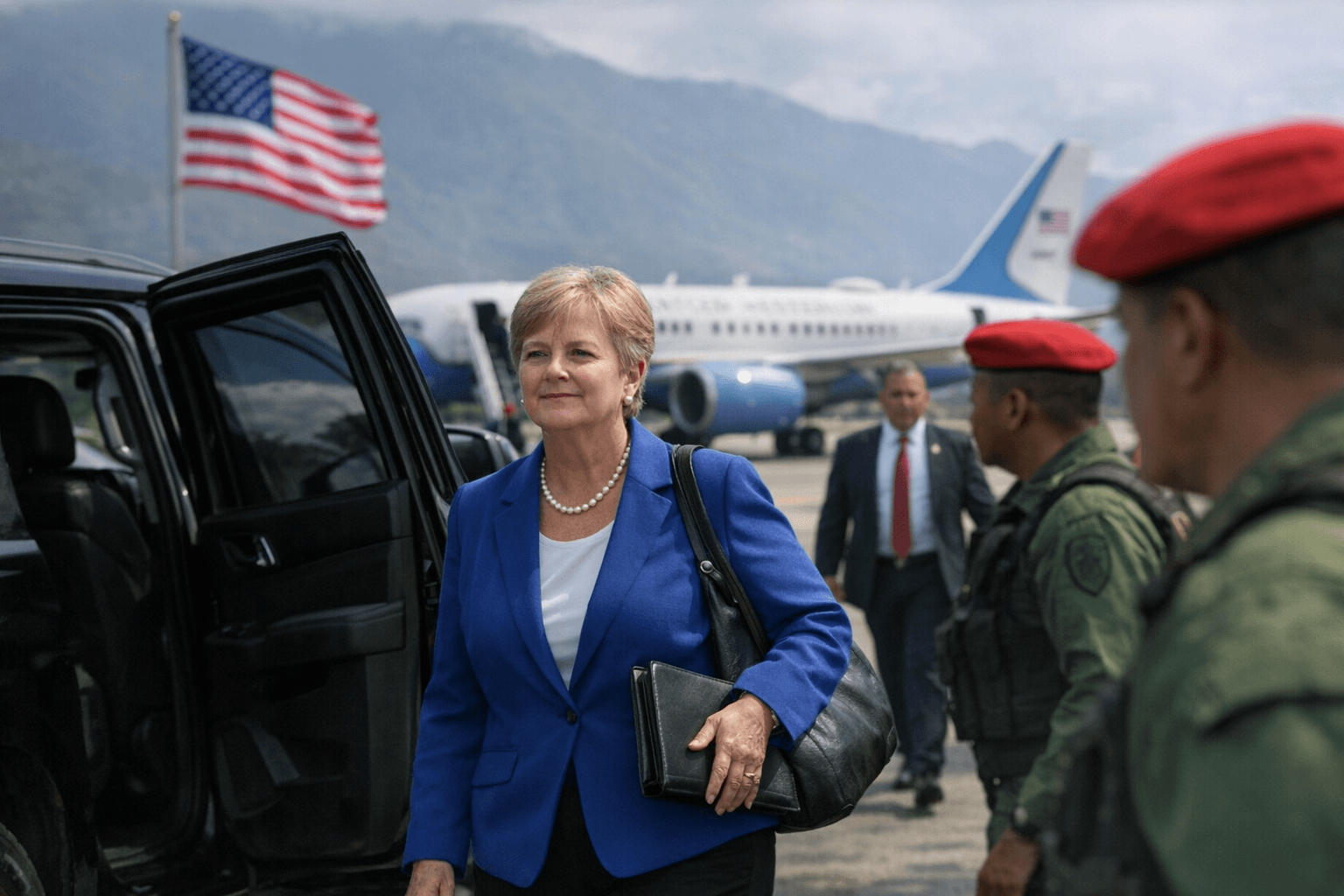
Laura Dogu, the U.S. charge d’affaires for Venezuela, arrived in Caracas on Saturday, January 31, 2026, to reopen the American diplomatic mission after seven years of severed ties. The return of a U.S. diplomatic presence in the Venezuelan capital marks a significant, if cautious, step in a relationship long strained by political confrontation and sanctions.
Reports of the arrival consistently identify Dogu by the title chargée d’affaires, a designation used when full ambassadorial exchange is not in place. Some accounts have referred instead to her as the U.S. ambassador, a discrepancy that underscores the delicate protocol at the heart of diplomatic normalization. Under the Vienna Convention and established practice, the distinction between chargé d’affaires and ambassador matters for accreditation, rank and the optics of bilateral recognition; clarification from the U.S. State Department and Venezuelan authorities will be required to determine Dogu’s formal standing and the mission’s mandate.
One account said, "Her arrival follows the U.S. removal of Nicolás Maduro from power in late January." That phrasing appears in a single report and has not been corroborated across other accounts; it therefore requires independent verification from primary sources. Whether or not that claim proves accurate, the reopening itself will prompt questions about the scope of diplomatic activity to be resumed in Caracas, from consular services for U.S. citizens to diplomatic channels for discussing sanctions, humanitarian aid and migration.
The restoration of a physical U.S. mission after a seven-year absence recalibrates the diplomatic architecture in a region where Washington and Caracas have repeatedly been at odds. For Venezuelans and U.S. citizens in Venezuela, even a limited mission can ease practical hardships by restoring consular casework and visa processing. For capitals across Latin America and in Europe, a U.S. presence in Caracas signals a willingness to engage directly with Venezuelan institutions rather than routing relations through third parties or multilateral fora.
The diplomatic return also intersects with broader geopolitical currents. Venezuela remains a focal point for competing influences beyond the Western Hemisphere, and any change in American engagement will be watched closely by regional governments, international financial institutions and the countries that have maintained closer ties with Caracas. Legal and operational details - including staffing levels, security arrangements and whether the mission will offer full consular services immediately - are central to understanding how far this reopening goes toward normalization.
Key factual questions remain: the official designation assigned to Dogu, the extent of U.S. consular operations to resume in Caracas, and authoritative confirmation of any claim that U.S. forces or policy actions removed Nicolás Maduro from power in late January. Answers will depend on formal announcements by the U.S. State Department and responses from Venezuelan authorities. For now, Dogu’s arrival represents both a practical step and a symbolic turning point in a fraught bilateral relationship, with implications that will unfold in diplomatic, legal and regional political terms.
Know something we missed? Have a correction or additional information?
Submit a Tip